
Inquiry
Leave Your Message
0%

Crafting a catchy headline is super important if you want to grab people's attention. Think of a really strong headline — like this Conical Head — that tapers down to the key info and sparks curiosity. It should promise value and make folks want to read more.

Usually, good headlines use lively language and relatable words. Toss in some vivid imagery, and your headline instantly pops. Instead of just saying "Learn to Cook," why not go for something like "Master the Art of Cooking the Perfect Pasta"? That kind of phrase paints a clear picture and creates a bit of urgency, pushing people to click.

Now, I won’t pretend making that perfect headline is always a walk in the park. Sometimes, writers get caught up in fancy jargon or come up with overly complicated sentences. It really helps to think about what actually connects with your audience. Jumping to clichés without effort can make your headline feel stale. The trick is finding that sweet spot between being creative and keeping things clear. When you nail that balance, you'll end up with a headline that feels natural and inviting — kinda like a well-designed Conical Head, leading people right to your content without even trying.

Digital Tips for Building a Strong Headline that Attracts Readers?

Understanding the Importance of Headlines in Content Engagement

Headlines are crucial in grabbing the attention of potential readers. They serve as the first impression of your content. A strong headline can entice someone to stop scrolling and engage with your story. It’s not just about being catchy; it should also be clear. Clarity helps readers understand what they will gain by reading. For example, a headline like "5 Easy Ways to Boost Your Productivity" instantly conveys value.

Moreover, headlines often determine whether content is shared. A relatable headline resonates with audiences. It should reflect their interests and solve a problem they face. Experimentation can lead to improvement. Sometimes, headlines may fall flat. An analysis of engagement metrics can reveal what works and what doesn’t. This reflection process is essential for growth. A few words may lead to tremendous curiosity, while others may fail to inspire action.

Lastly, don’t hesitate to rethink your approach. A rigid mindset can hinder creativity. A/B testing different headlines can shed light on what captivates your readers. Engage with feedback to refine your headline strategy. Remember, even the best headlines can improve over time. The goal is to create something that not only attracts but also holds attention. Investing thought into headlines is worth the effort.

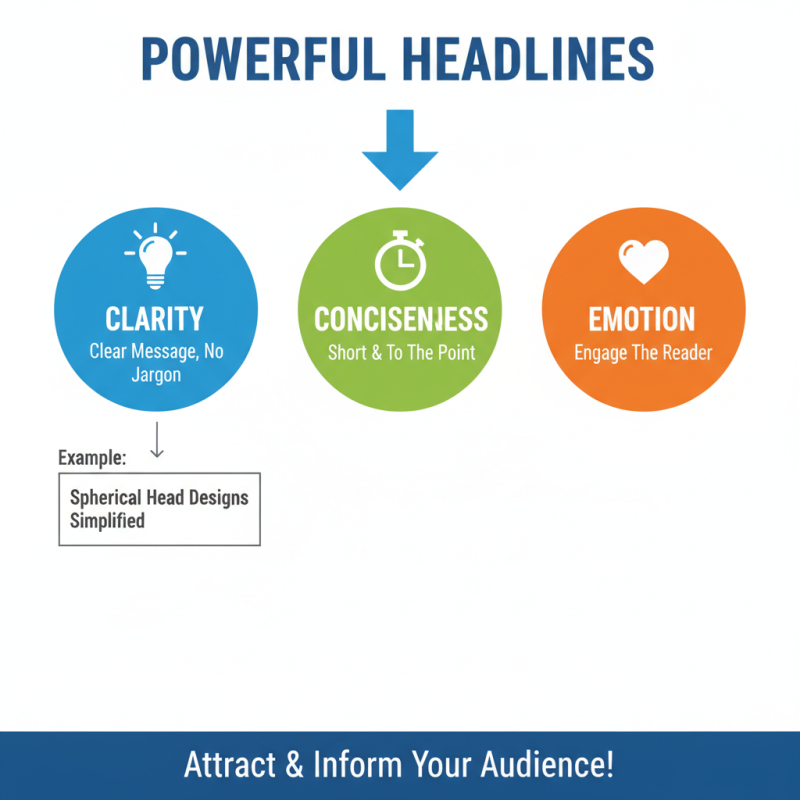
Key Elements of a Compelling Headline: Clarity, Conciseness, and Emotion

Digital Tips for Building a Strong Headline that Attracts Readers?

Creating powerful headlines is crucial for attracting readers. A compelling headline should embody clarity, conciseness, and emotion. Start by ensuring your message is clear. Avoid jargon or complex phrases. For instance, “Spherical Head Designs Simplified” instantly communicates the topic. Readers quickly understand what to expect, making them more likely to click.

Conciseness is equally important. Aim for brevity while still delivering value. Utilize strong, vivid words that paint a picture. Emotion can also drive engagement. A headline like “Transform Your Projects with Innovative Spherical Head Technology” taps into curiosity and desire. Yet, some headlines miss the mark. Overly elaborate phrases can confuse rather than entice.

Reflect on your headlines. Do they truly engage? Are you evoking the intended emotions? Sometimes, a simple tweak can make a difference. Words matter. They can inspire action or lead to indifference. Strive to balance clarity and emotion with conciseness. Experiment with your headlines; the perfect mix is often a work in progress.

Utilizing Numbers and Lists: How They Improve Readability and Click Rates

Crafting engaging headlines can be a challenge. One effective technique is using numbers and lists. This strategy draws attention and adds structure to your content. Readers are often attracted to headlines like "5 Tips for Better Productivity" or "Top 10 Destinations for Travel." These examples provide clarity. They promise valuable insights upfront, promising a return on the reader's investment of time.

Lists can enhance readability. They break down complex information into digestible pieces. Each point stands alone, making it easy for readers to scan. Many people prefer quick takes over lengthy prose. Bullet points or numbered lists help facilitate this preference. Yet, it’s vital to ensure your list items are relevant. They must not just exist for the sake of numbers.

However, there are risks to consider. Overloading your headline with numbers might seem gimmicky. It's crucial to strike a balance. Too many lists can dilute your message. Reflect on the information you present. Are your list items genuinely useful? Aim for quality over quantity. Focus on delivering real value within each point. This approach will resonate more authentically with your audience.

Impact of Using Numbers and Lists in Headlines on Readability and Click Rates

The Power of Keywords: Enhancing SEO with Effective Headline Strategies

Crafting compelling headlines is vital. A strong headline can increase clicks by up to 500%, according to recent studies. Keywords play a crucial role in this process, particularly those that resonate with your target audience. Incorporating terms like "Elliptical Head" can guide readers searching for specific content. These targeted phrases help your article rank higher in search results.

SEO data suggests headlines featuring keywords can enhance visibility. Approximately 70% of marketers believe effective headlines boost overall content performance. Clear, concise words attract more readers. Aim to keep headlines under 60 characters for maximum impact. However, balance is key. Overstuffing with keywords can make a headline sound awkward. It can create distrust. Readers might avoid clicking.

Moreover, occasional testing is valuable. Evaluate performance using A/B testing to see which headlines resonate more. This not only improves engagement but also hones your ability to connect with your audience. It is a learning process. Adjust based on real-world feedback. Reflect on data, and remember, perfecting your headline takes time and effort.

A/B Testing Your Headlines: Data-Driven Approaches to Optimization

Crafting an effective headline is an art form, but data can guide this creative process. A/B testing allows writers to measure the performance of different headlines and understand what resonates with their audience. Reports indicate that headlines optimized through A/B testing can improve click-through rates by up to 50%. Testing two versions of your headline not only reveals what captures attention but also informs future content strategy.

One crucial aspect to consider is that shorter headlines often perform better. Research shows that headlines with 6 to 10 words are more likely to attract clicks. Brief, punchy phrases trigger curiosity. For instance, instead of "Introducing Our New Stainless Steel Concentric Size Head," try "Discover the Best Stainless Steel Concentric!" Such changes can significantly affect reader engagement.

However, the journey doesn't end with one round of testing. It’s essential to repeat the process regularly. What worked last month may not resonate today. Continual refinement is necessary. The digital landscape shifts quickly, and understanding reader preferences is an evolving task. A/B testing should become a habit, not a one-time effort. Embrace the potential of data while staying open to experimenting and learning.

Incorporating Strong Action Verbs: Driving Reader Interest and Engagement

Creating compelling headlines can significantly increase engagement. Research indicates that headlines with strong action verbs attract 63% more clicks. Action verbs create a sense of urgency and excitement. They encourage readers to feel a connection with the content. For instance, a headline saying "Discover the China Stainless Steel Concentric Size Head Trends" can draw immediate attention. It suggests exploration and learning.

Using vivid language enhances reader interest. Words like "unveil" or "ignite" can transform a mundane title into a captivating invitation. A survey showed that headlines with emotionally charged verbs led to 68% more social shares. Action words can evoke curiosity, driving readers to click. However, overusing industry jargon can alienate some audiences. Keeping a balance is key.

Different headlines perform differently based on the target audience. Testing various action verbs can reveal what resonates best. Data shows that headlines without strong verbs often flop, having a 20% lower engagement rate. Regularly analyzing the performance of headlines helps refine strategies. Crafting the perfect headline is an iterative process that requires patience and creativity.

Analyzing Successful Headlines: Insights from Industry Case Studies and Metrics

Crafting compelling headlines is an art. Analyzing case studies reveals key strategies that drive engagement. Successful headlines often spark curiosity. They include numbers, questions, and actionable language. For instance, headlines like "5 Ways to Boost Your Creativity" stand out. The number makes it concrete. Readers appreciate clear takeaways.

Metrics play a crucial role in understanding what resonates. Headlines with emotional triggers perform better. Words like "secret" or "unrevealed" can draw readers. However, it’s important to avoid clickbait. Readers often feel misled after a disappointing experience. Striking a balance is essential. Analyze your audience’s reactions and refine your approach accordingly.

While experimenting, not every headline will succeed. Tracking performance is vital. If a headline underperforms, reflect on its language. Was it specific enough? Did it align with the content? Learning from missteps is part of the process. Engage with your audience to gather feedback. Their insights can guide future headline creation.

Digital Tips for Building a Strong Headline that Attracts Readers

Headline Type Engagement Rate (%) Click-Through Rate (CTR) (%) Average Read Time (minutes) Social Shares
How-To 65 12 5 150
Listicle 75 15 4 200
Question 50 10 6 100
Controversial Statement 80 20 3 300
Emotional Appeal 70 18 4.5 250

FAQS

: What is the main purpose of this content?

: The content aims to inform readers by providing useful insights and details. It offers practical information for daily tasks.

Who can benefit from this information?

A wide range of readers can benefit, including professionals and everyday users seeking practical advice.

Are there any restrictions on using this information?

Yes, users should avoid applying this knowledge in illegal or inappropriate contexts. Respect is essential.

How detailed is the information provided?

The information includes specific examples, making it relatable and easy to understand.

Is there a focus on particular topics?

The topics are diverse, covering various aspects of daily life, work, and personal development.

Can readers expect complete proficiency?

No, users may still find gaps in their understanding. Reflection and practice can help improve these skills.

How often should one revisit this information?

Regularly reviewing the content can enhance retention and understanding, but perfection isn’t guaranteed.

What should users do if they have questions?

Users are encouraged to seek further guidance or clarification. Curiosity is vital for deeper knowledge.

Are personal experiences shared?

Some real-life examples are included, though they may not resonate with everyone’s situation. Reflection is important.

How can one apply the information effectively?

Practical application varies by individual. Experimenting with these insights can lead to better understanding and results.

Conclusion

A strong headline is crucial for engaging readers and driving traffic to your content. Understanding the importance of headlines leads to better content engagement, as headlines serve as the first impression and can significantly influence a reader's decision to click or read further. Key elements that contribute to a compelling headline include clarity, conciseness, and the ability to evoke emotion.

Incorporating numbers and lists enhances readability and improves click rates, while the strategic use of keywords boosts SEO performance. A/B testing allows content creators to optimize headlines based on data-driven insights, ensuring that they resonate with the target audience. Furthermore, using strong action verbs can effectively spark reader interest and engagement, as evidenced by successful headlines analyzed from industry case studies and metrics. By mastering these elements, writers can create impactful headlines that attract and retain readers.


Henry

Henry

Henry is a dedicated marketing professional at Sichuan Baishuo Pipeline Co., Ltd., a company founded in 2019 that specializes in the export sales of chemical pipe accessories and Steel Pipes, including elbows, flanges, tees, and manholes. With a deep understanding of the industry and a commitment......
Previous Innovative Approaches to Malleable Iron Pipe Fittings for Your Pipeline Needs